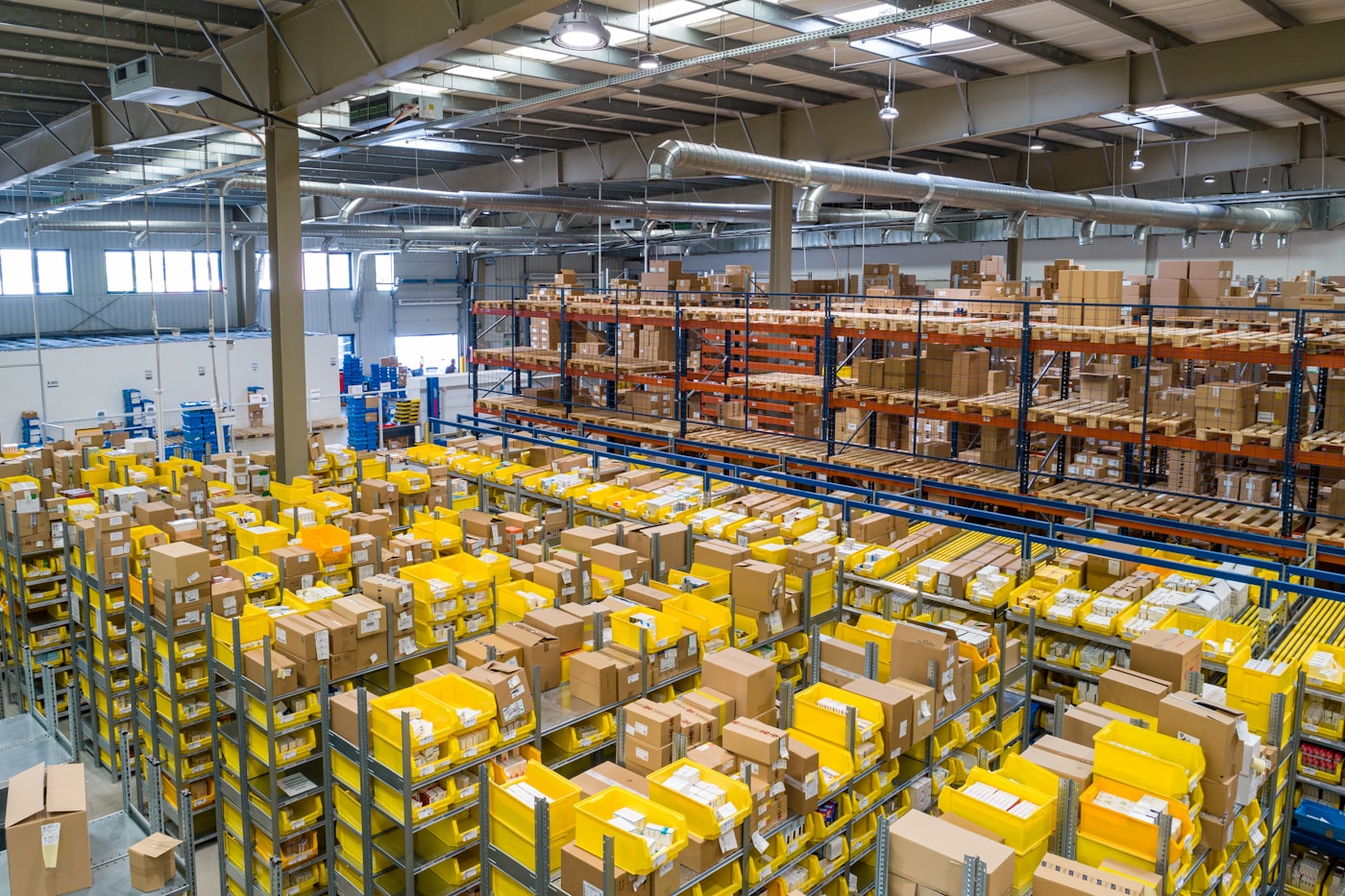
When distribution and manufacturing companies scale from processing hundreds to tens of thousands of delivery orders daily, conventional spreadsheets and fragmented desktop accounting systems inevitably reach their structural limits. Classic operational friction quickly emerges: inventory discrepancies between central and regional warehouses, tax invoice reconciliation bottlenecks that consume entire working weeks, and delayed receivables data while transport fleets are already on transit routes.
Executive leadership frequently confronts an IT investment dilemma. Global proprietary ERP platforms impose aggressive per-user monthly subscription fees. Under this licensing model, every additional warehouse operator, retail cashier, or logistics clerk inflates recurring monthly overhead. Conversely, deploying disconnected departmental point solutions produces data silos that hinder strategic business agility.
Sustainable digital transformation in modern supply chains relies on one fundamental principle: aligning enterprise-grade software capabilities with front-line operational velocity, rather than draining working capital on prohibitive software licensing fees. This is where ERPNext v16, powered by Frappe Framework v16, delivers the optimal architectural solution for distribution and manufacturing enterprises demanding full data sovereignty and long-term cost predictability.
1. Frappe Framework v16 Foundation: Modular, Extensible, and License-Free
Unlike rigid monolithic ERP systems, ERPNext v16 is built on top of Frappe Framework v16—a modern full-stack web application framework built with Python and JavaScript that leverages a robust metadata-driven architecture. Every business entity—from item master records and tiered pricing schemes to multi-level document approval workflows—is structured natively as a configurable DocType.
Three Core Structural Advantages of ERPNext v16:
- 100% Open-Source Licensing (GNU General Public License v3): Zero recurring per-user fees and zero modular paywalls. Enterprises gain the autonomy to onboard hundreds of warehouse clerks, branch personnel, and executive directors without inflating monthly operational costs.
- Complete Data Sovereignty: All relational database schemas, audit trails, and sensitive transactional documents reside securely on your own private cloud or on-premise infrastructure, eliminating third-party platform lock-in.
- Native Headless REST API Capabilities: Frappe automatically exposes authenticated REST API endpoints for every DocType. This enables seamless bidirectional synchronization with e-commerce storefronts, point-of-sale terminals, payment gateway webhooks, and automated warehouse management hardware.
2. 3-Year Total Cost of Ownership (TCO) Breakdown
To evaluate capital efficiency objectively, consider this 3-year total cost of ownership analysis for a mid-market distribution enterprise operating with 40 active concurrent users:
| Investment Component | Conventional Per-User SaaS Model | Self-Hosted ERPNext v16 (Samkarsa Implementation) |
|---|---|---|
| User Licensing (40 Users x 36 Months) | $21,600 – $36,000 (At $15–$25/user/month) | $0 (Perpetually Free License) |
| Enterprise Module Add-ons (Mfg & HRMS) | $5,400 (Paid modular upgrades) | $0 (All Core Modules Included) |
| Cloud Server Infrastructure (KVM VPS) | $3,500 (Proprietary managed cloud tier) | $1,100 (Dedicated KVM NVMe VPS) |
| Implementation, Consulting & Training | $9,000 – $14,000 | $5,500 – $8,500 (Samkarsa Implementation) |
| Estimated 3-Year Total Cost | $39,500 – $58,900 | $6,600 – $9,600 |
Note: Figures above assume standard distribution and manufacturing workflow custom requirements.
By recovering significant capital expenditure from recurring software rents, enterprises can reallocate financial resources into transport fleet expansion, new regional fulfillment centers, or raw material bulk purchasing reserves.
3. Production Infrastructure Blueprint: Running ERPNext v16 on Independent KVM VPS
Processing thousands of daily inventory mutations with sub-second response times requires careful server infrastructure planning. ERPNext v16 relies on MariaDB with optimized InnoDB engine parameters, Redis instances for session caching and background job worker queues, and Node.js for real-time WebSocket communication.
Under production workloads, the underlying host machine requires high single-core CPU clock speeds and low-latency NVMe storage to prevent perpetual inventory valuation recalculations and trial balance aggregations from encountering I/O bottlenecks.
For production clusters supporting 25 to 60 concurrent users, deploying containerized instances on high-performance virtual private servers like Hostinger KVM 4 VPS provides exceptional throughput. Featuring 4 dedicated vCPU cores, 16 GB of RAM, and 200 GB of pure NVMe storage on a 300 Mbps uplink, this configuration gives MariaDB ample overhead to allocate an 8 GB innodb_buffer_pool_size without risking Out-Of-Memory (OOM) termination. When configuring your compute instances, you can apply the official discount coupon 6X5PUTERARQL during checkout for substantial recurring savings on multi-year hosting tiers.
Here is a hardened docker-compose.yml baseline designed for production ERPNext v16 container deployment:
version: "3.8"

services:
  erpnext-backend:
    image: frappe/erpnext:v16.0.0
    restart: unless-stopped
    environment:
      - DB_HOST=mariadb
      - DB_PORT=3306
      - REDIS_CACHE=redis-cache:6379
      - REDIS_QUEUE=redis-queue:6379
    volumes:
      - sites-vol:/home/frappe/frappe-bench/sites
      - logs-vol:/home/frappe/frappe-bench/logs
    depends_on:
      - mariadb
      - redis-cache
      - redis-queue

  mariadb:
    image: mariadb:10.11
    restart: unless-stopped
    command:
      - --character-set-server=utf8mb4
      - --collation-server=utf8mb4_unicode_ci
      - --innodb-file-per-table=1
      - --innodb-buffer-pool-size=8G
    environment:
      - MYSQL_ROOT_PASSWORD=${DB_ROOT_PASSWORD}
    volumes:
      - mariadb-data:/var/lib/mysql

  redis-cache:
    image: redis:7-alpine
    restart: unless-stopped

  redis-queue:
    image: redis:7-alpine
    restart: unless-stopped

volumes:
  sites-vol:
  logs-vol:
  mariadb-data:
Essential MariaDB Tuning Parameters for Transactional Throughput:
innodb-buffer-pool-size=8G: Caches up to 50% of the host machine’s total 16 GB memory footprint, ensuring critical inventory ledger tables (tabBin,tabStock Ledger Entry) stay permanently hot in memory.character-set-server=utf8mb4: Guarantees full Unicode compliance and eliminates encoding discrepancies across multilingual item descriptions.
4. Implementation Risk Mitigation: When to Partner with Expert Consultants
While the core software stack of ERPNext v16 is fully open-source and free to install, successful enterprise deployments depend heavily on operational alignment:
- Chart of Accounts (CoA) Architecture: Structuring fiscal ledgers to align precisely with local compliance mandates and statutory financial reporting standards.
- Initial Balance Migration & Stock Valuation: Accurately importing legacy ledger balances, serial numbers, and batch valuations without distorting opening balance sheets.
- Organizational Change Management: Guiding warehouse supervisors, procurement teams, and accountants through tailored interface training to ensure seamless user adoption.
For businesses looking to guarantee implementation continuity with zero operational downtime, partnering with verified Frappe specialists such as Samkarsa.com ensures risk-free execution. Samkarsa consultants manage end-to-end implementation lifecycles—from strategic business blueprinting and custom DocType engineering to localized e-tax compliance integrations and on-site user enablement.
Executive Summary
Selecting an ERP architecture for distribution and manufacturing operations is a decisive long-term strategy. Combining ERPNext v16’s zero per-user licensing model, self-hosted KVM NVMe VPS infrastructure, and disciplined professional implementation delivers enterprise capability with verifiable financial return and complete sovereign control over company data.